
Experience the Next Level of Dental Implants with Computer Guidance
Roam Dental in Shelby Township uses computer-guided implant placement — combining CBCT 3D imaging with custom surgical guides for submillimeter precision during implant surgery. Dr. Virgil Barbu plans every implant digitally before touching the patient, then uses a 3D-printed guide to place the implant exactly where the computer planned it — avoiding nerves, sinuses, and adjacent roots. Patients from Shelby Township, Utica, Sterling Heights, and across Macomb County get safer, faster, more predictable implant results. Schedule a guided implant consultation or call (586) 500-7647.
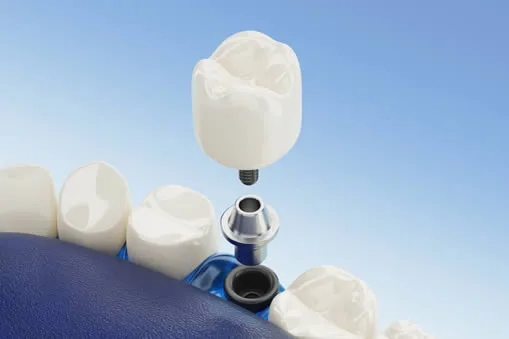
Computer Guided Dental Implants is an advanced technology used in dentistry to improve the precision and accuracy of dental implant placement. It involves the use of 3D imaging technology and specialized software to create a virtual model of the patient’s mouth, which can then be used to plan the placement of dental implants. This technology allows dentists to place dental implants in a more predictable and accurate manner, resulting in a more natural-looking smile and improved overall oral health.
During the procedure, a small titanium post is placed into the jawbone to support a replacement tooth or teeth. Traditionally, the implant placement has been done manually using surgical guides and experience of the dentist. However, with computer-guided implant placement, the surgeon can use the virtual model of the patient’s mouth to plan and place the implant with a higher degree of accuracy, and without the need for invasive surgery. The software provides detailed information about the bone density, location of nerves, and other factors that affect the success of the dental implant placement.
Computer Guided Dental Implants offer several benefits over traditional implant placement, including a shorter recovery time, reduced pain and discomfort, and improved accuracy. Additionally, the procedure is less invasive, making it a more attractive option for patients who are nervous about dental surgery.
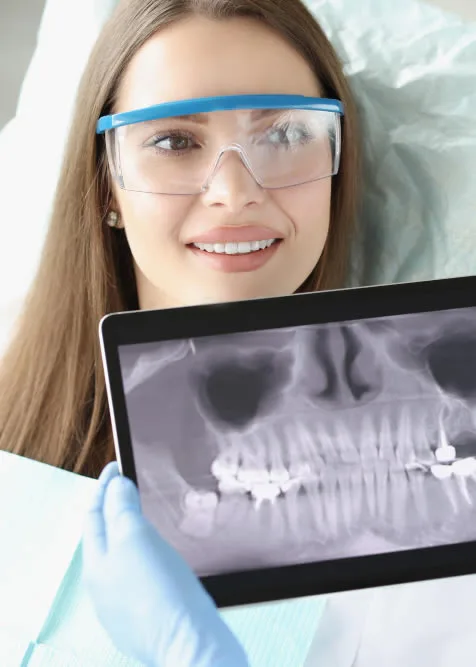
There are several advantages to 3D Guided Dental Implants surgery, including:
Every implant is planned to the millimeter using 3D bone data — angle, depth, and diameter are determined digitally before surgery, eliminating guesswork entirely.
The surgical guide allows implant placement through small, precise openings — reducing trauma to surrounding tissue, minimizing bleeding, and accelerating healing.
Digital pre-planning and the surgical guide streamline the actual placement procedure, reducing the total time in the chair and the complexity of surgery day.
Implants placed at the precise planned angle and depth integrate more reliably, support the crown more effectively, and deliver superior long-term aesthetic results.
The entire outcome is mapped digitally before surgery begins — giving patients and your dentist shared confidence in a highly predictable, long-lasting final result.
Computer Guided Dental Implants is a good fit if you are:
This may not be the right option if:
Here is exactly what happens at your appointment at Roam Dental. Knowing each step makes the experience far less intimidating — and lets you relax knowing what comes next.
These are the questions patients at Roam Dental ask most often before committing to treatment. Dr. Barbu addresses each one honestly at your consultation.
"Is guided surgery really different, or is it just marketing?"
It's real and measurable. Studies show guided implant placement is significantly more accurate than freehand — with precision measured in fractions of a millimeter. For cases near nerves or sinuses, that accuracy matters.
"Does it cost more?"
There's a modest additional cost for the CBCT scan and 3D-printed surgical guide, but it often reduces surgery time, minimizes post-op recovery, and prevents expensive complications. The value is real.
"Is it more uncomfortable than traditional surgery?"
Usually less. Because the drill follows a pre-planned path, surgery is faster and often uses a smaller incision (or even no incision — flapless). Most patients report less swelling and faster recovery.
Every procedure has tradeoffs, and transparent conversation about them is part of informed consent. Dr. Barbu reviews these at your consultation and answers every question before treatment begins.
Guided implant surgery is the default at Roam Dental whenever anatomy is complex — close to the inferior alveolar nerve, near the sinus floor, or in areas with limited bone. The computer plans the ideal position in three dimensions, and the drill follows exactly to that plan.
What guided surgery delivers is predictability. Surgery is faster, incisions are smaller, swelling is reduced, and the final crown fits better because the implant was placed precisely for the restorative plan — not just where it could be fit.
Reviewed by Dr. Virgil Barbu, DDS · Roam Dental, Shelby Township, MI
Utilizing advanced imaging technology, 3D guided dental implant surgery generates a precise 3D model of the patient’s jaw and teeth, facilitating the planning of the dental implant placement. Consequently, this approach leads to a more efficient, less invasive, and highly accurate surgery.
Contrary to popular belief, 3D guided dental implant surgery can result in minimal postoperative pain and discomfort due to its minimally invasive nature. Additionally, the precise implant placement minimizes the risk of damaging surrounding tissues, thereby leading to a smoother recovery process.
On the contrary, 3D guided dental implant surgery can be a quicker alternative to traditional implant surgery owing to the accurate planning and execution of the implant placement. Furthermore, the utilization of a surgical guide eliminates the requirement for extended incisions and sutures, leading to a faster recovery period.
The duration of recovery after the 3D guided dental implant surgery may vary based on the complexity of the procedure and individual patient. However, in general, most patients can anticipate returning to their regular activities within a few days to a week after the surgery. Your dentist will offer you comprehensive postoperative instructions to ensure a smooth recovery.
The expenses associated with 3D guided dental implant surgery may be slightly more than those of traditional implant surgery due to the need for advanced technology and specialized expertise. Nevertheless, most patients deem the benefits of 3D guided surgery, such as precision, efficiency, and long-term efficacy, to be worth the investment.
Although 3D guided dental implant surgery is an efficient and risk-free procedure, it may not be suitable for everyone. Your dentist will assess your unique case and determine if 3D guided surgery is the most appropriate option for you. Factors like the quantity and quality of bone, medical history, and overall oral health will be evaluated before making a decision.
Yes. At our Shelby Township dental office we offer computer guided dental implants to patients from Shelby Township and the surrounding area. Contact our office today to schedule an appointment.
Traditional implant placement relies on the surgeon's visual assessment during surgery. Guided surgery uses a CBCT scan, digital planning, and a custom 3D-printed guide that physically directs the drill to the exact pre-planned position, angle, and depth.
Guided surgery typically adds a small cost for the CBCT scan and surgical guide, but it often reduces surgery time and recovery. For complex cases, the precision more than justifies the small additional fee. Dr. Barbu will discuss cost at your consultation.
Many patients report less swelling and faster recovery with guided surgery because the procedure is typically less invasive — smaller flap or flapless technique is often possible. Local anesthesia and optional sedation keep you comfortable during the procedure.
Medical Disclaimer
This content is for informational purposes only and does not constitute dental or medical advice, diagnosis, or treatment. Computer-guided surgery reduces but does not eliminate surgical risks. Possible complications include infection, implant failure, nerve irritation, and sinus involvement — the same as traditional implant placement. Consult Dr. Virgil Barbu or a qualified dental professional regarding any questions about your oral health. Individual results may vary.
Contact our office to discuss how this treatment can help you achieve your dental health goals.