
An alternative to traditional fillings and crowns
Roam Dental in Shelby Township offers custom porcelain inlays and onlays — a conservative restoration for teeth too damaged for a filling but not requiring a full crown. Dr. Virgil Barbu uses digital impressions and lab-fabricated porcelain restorations that bond directly to the tooth, preserving more natural structure than a crown while delivering long-lasting strength and aesthetics. Patients from Shelby Township, Utica, Sterling Heights, and across Macomb County choose inlays and onlays as the sweet spot between fillings and crowns. Schedule a consultation or call (586) 500-7647.
Dental restorations such as inlays and onlays are an essential part of modern dentistry. When a tooth is damaged due to decay or trauma, it often requires a restoration to restore its function and aesthetics. Inlays and onlays are two types of indirect restorations that are used to repair a damaged tooth. These restorations are custom-made in a dental laboratory and are designed to fit precisely into the cavity of the tooth. Inlays and onlays are often considered an alternative to traditional dental fillings and are commonly used for restoring molars and premolars that have suffered moderate to severe damage. They offer excellent durability, strength, and aesthetic value, making them an ideal choice for patients who want to preserve their natural teeth.
Inlays and onlays serve to repair tooth decay by filling in cavities and hollows in a tooth. An inlay is used to fill spaces between the cusps, while an onlay can be used for larger areas, including the cusps themselves. Although they function similarly to crowns, they do not cover the entire tooth surface. Inlays and onlays are constructed from the same materials and perform the same task, but they protect different regions of the tooth to ensure proper care for tooth decay.
Inlays and onlays are highly durable and long-lasting dental solutions, with an expected lifespan of 5 to 30 years. However, dental professionals cannot guarantee their longevity due to factors like wear and tear and lack of care. Proper dental hygiene habits such as brushing and flossing, along with follow-up visits to the dentist, are crucial to maintaining the stability and health of inlays and onlays. Patients should also take measures to reduce wear and tear, such as using nightguards to prevent teeth grinding and avoiding hard or chewy foods that may damage the material. While there is no set timeframe for their lifespan, the longevity of inlays and onlays depends on overall oral health and proper care.
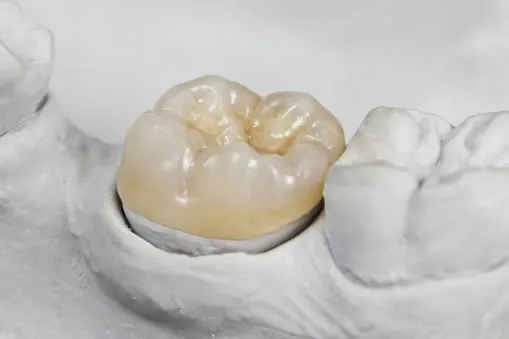
The main contrast between an onlay and an inlay lies in their coverage area. While an inlay fills in the spaces between the cusps, an onlay can also cover the cusps of the tooth. Although they may seem similar to dental crowns, they serve different purposes. Dental professionals use onlays when a less aggressive restoration is required to preserve more of the tooth’s structure, whereas crowns cover the entire tooth, necessitating significant reshaping. The difficulty in obtaining a suitable onlay underscores the importance of the dentist’s skill and expertise. Therefore, neither is inherently superior, and our dentist will recommend the most suitable option for the situation.
Similar to the ongoing debate between onlays and crowns, determining whether inlays or fillings are better involves considering multiple factors. Generally speaking, inlays are superior because they can fill larger cavities and are more durable than fillings. The amalgam in fillings can expand and contract due to temperature changes, which can cause cracking in the filling or even the tooth itself. Inlays are custom-made from an impression, which allows them to fit perfectly into the cavity and strengthen the tooth. In some cases, they can increase the tooth’s ability to handle up to 75% more chewing force than before the decay.
However, fillings have their own benefits for many patients, particularly the speed at which they can be placed. In contrast to inlays, fillings can typically be completed in just one visit, as the materials are readily available in the office. They are also less expensive and more widely covered by insurance. Ultimately, while inlays may perform better than fillings, their higher cost reflects their superior performance.
Inlays and onlays are the conservative restoration of choice when a tooth has too much damage for a filling but enough healthy structure that a full crown would be overkill. They preserve enamel, and preservation is always the first priority.
Porcelain inlays and onlays are bonded, not cemented, which actually strengthens the tooth they are placed in. Done right, they can last 15+ years — and they look so natural that most patients cannot tell them apart from their original tooth.
Reviewed by Dr. Virgil Barbu, DDS · Roam Dental, Shelby Township, MI
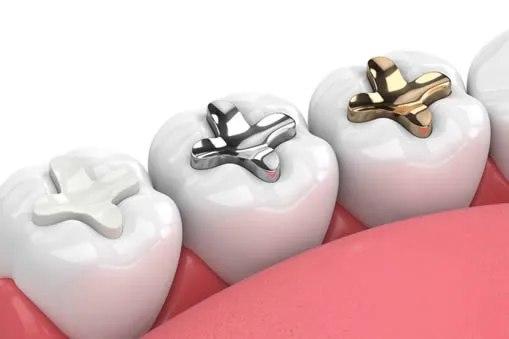
There are several different types of inlays and onlays, including:
We will work with you to determine the best type of inlay or onlay for your specific needs and budget.
Inlays and onlays remove only the damaged portion of the tooth, preserving significantly more healthy enamel than a full crown preparation requires.
Laboratory-fabricated inlays and onlays are significantly stronger and more durable than direct composite or amalgam fillings, especially for larger restorations.
Porcelain inlays and onlays are shade-matched to blend invisibly with surrounding enamel, delivering a restoration that looks completely natural.
Each inlay or onlay is custom-fabricated from a precise impression of your tooth, ensuring a perfect fit that prevents gaps where bacteria could enter.
With proper oral hygiene, porcelain inlays and onlays can last 15–30 years — far exceeding the lifespan of conventional composite fillings.
Inlays and Onlays is a good fit if you are:
This may not be the right option if:
Here is exactly what happens at your appointment at Roam Dental. Knowing each step makes the experience far less intimidating — and lets you relax knowing what comes next.
These are the questions patients at Roam Dental ask most often before committing to treatment. Dr. Barbu addresses each one honestly at your consultation.
"Why not just a filling?"
Fillings are great for small cavities, but for larger damage they don't provide enough strength and can cause tooth fracture. Inlays and onlays are stronger, bonded to the tooth, and preserve more natural structure than a crown.
"Aren't inlays/onlays just an upsell?"
No — they fill a specific middle ground. Dr. Barbu uses them when a filling isn't strong enough and a full crown would remove too much healthy tooth. They're a conservative restoration, not an upsell.
"How long do they really last?"
Porcelain inlays and onlays bonded properly typically last 15–20+ years. The bond actually strengthens the tooth, and porcelain resists staining and wear over time.
Every procedure has tradeoffs, and transparent conversation about them is part of informed consent. Dr. Barbu reviews these at your consultation and answers every question before treatment begins.
Inlays and onlays are custom-made in a dental laboratory. Your dentist will take an impression of your tooth and send it to the lab, where the restoration will be fabricated from a material such as porcelain, gold, or composite resin.
Inlays and onlays provide a strong and durable restoration that can last for many years. They are custom-made to fit your tooth, providing a precise and comfortable fit. They are also aesthetically pleasing and can be matched to the color of your natural teeth.
The process of getting an inlay or onlay typically takes two visits to the dentist. During the first visit, your dentist will prepare the tooth and take an impression. The restoration will then be fabricated in a dental laboratory. During the second visit, the restoration will be cemented into place.
You should care for your inlay or onlay the same way you care for your natural teeth. This includes brushing twice a day, flossing daily, and visiting your dentist for regular checkups and cleanings.
In some cases, inlays and onlays can be repaired if they become damaged or broken. However, if the damage is extensive, the restoration may need to be replaced.
Inlays and onlays are typically covered by dental insurance plans. However, the amount of coverage may vary depending on your plan and the type of restoration you receive. Your dentist can help you understand your insurance coverage and any out-of-pocket costs.
Yes. At our Shelby Township dental office we offer inlays and onlays to patients in Shelby Township and the surrounding area. Contact our office today to schedule an appointment.
Fillings are placed directly in the tooth during a single visit. Crowns cover the entire tooth and require significant removal of healthy structure. Inlays and onlays fall in between — they repair larger damaged areas while preserving more natural tooth than a crown.
With proper care, porcelain inlays and onlays typically last 15–20+ years. The bonded placement makes them extremely stable, and the porcelain material resists staining and wear.
Most dental insurance plans cover inlays and onlays at the same rate as fillings or crowns (usually 50–80%). We verify your benefits before treatment and offer financing for any balance.
Medical Disclaimer
This content is for informational purposes only and does not constitute dental or medical advice, diagnosis, or treatment. Inlays and onlays require removal of some tooth structure, which is irreversible. Possible risks include temporary sensitivity, bite adjustment needs, and eventual need for replacement. Consult Dr. Virgil Barbu or a qualified dental professional regarding any questions about your oral health. Individual results may vary.
Contact our office to discuss how this treatment can help you achieve your dental health goals.